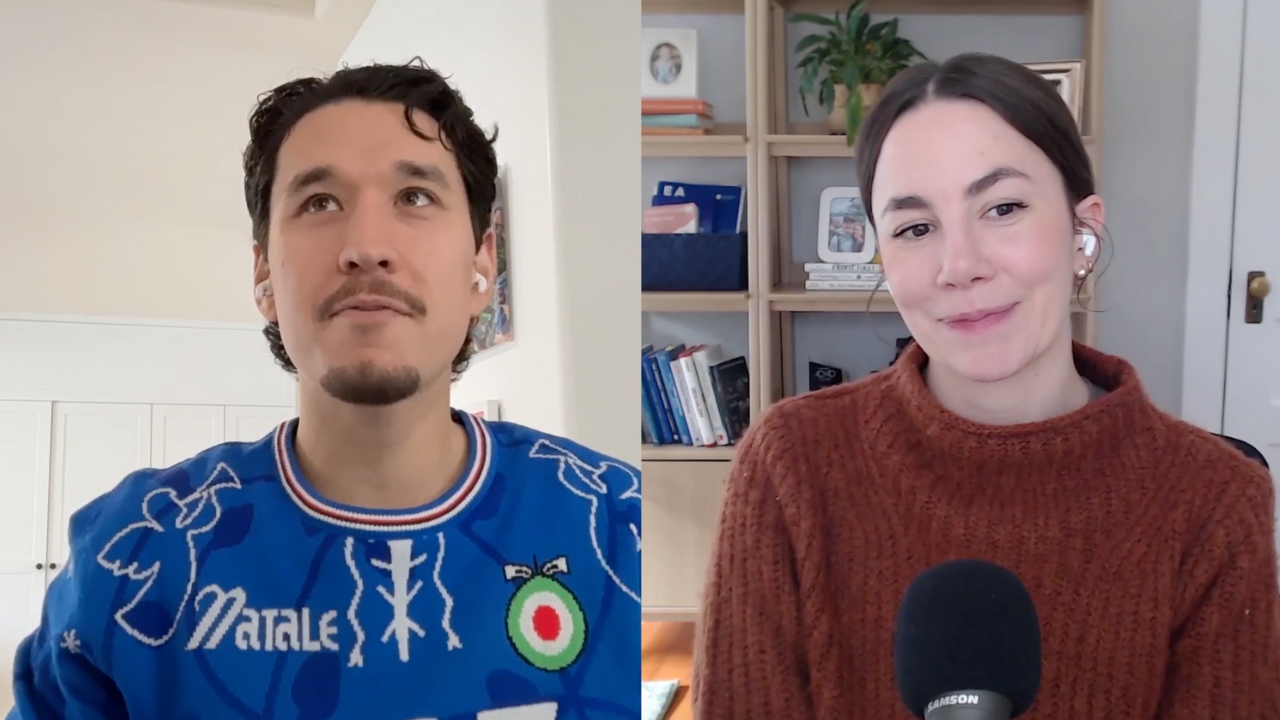
“I feel like the goal today is really just to normalize what we've learned throughout the year, normalize financial mistakes, and also financial growth.”
What does financial transparency really look like? Our hosts, Natalie and Dan Slagle, open their books (literally!) to share the unfiltered reality of their 2025 financial journey.
The highs were high.
Their financial planning practice achieved 107% of its revenue goal, enabling them to provide meaningful employment while maintaining their own financial security. Personally, they saved $54,000 across retirement accounts, a 529 plan, and brokerage investments.
Most significantly, they saved enough for a home down payment ($140,000) but chose to press pause and continue renting. Not only did this give the Slagles financial flexibility, but also peace of mind.
But transparency means sharing the lows too.
Dan regrets spending over $500 between two pairs of marathon shoes after second-guessing his original purchase. Natalie confesses to falling down the Amazon rabbit hole during maternity leave. Their recycling bin, now nearly empty after cutting Amazon for just one month, serves as a surprising "lagging indicator" of improved spending habits.
Emergency expenses stung hardest, like Dan's $3,000 root canal redo, plus several other four-figure surprises.
Through it all, they embraced the power of regular financial check-ins as a couple. They’ve learned to give themselves grace during expensive life stages (like $2,000 monthly childcare), and not lose sight of long-term wins while managing short-term stress.
Looking ahead to 2026, Natalie wants to build a more confident money mindset and increase charitable giving, while Dan aims to focus less on daily cash flow anxiety and more on the bigger financial picture that’s at work behind the scenes.
Key Topics:
• Setting Up 2025's Financial Recap (05:03)
• Business Revenue (08:37)
• Personal Savings (13:16)
• The Home Purchase Decision and Financial Calm (14:49)
• Regrettable Purchases (17:16)
• Emergency Expenses That Hurt (24:20)
• The Down Payment That Wasn't: $140,000 in Perspective (26:48)
• Hard Lessons: The Need for Regular Check-Ins (30:39)
• 2026 Goals: Mindset and Charitable Giving (33:49)
Schedule a Free Consultation: Click the button in the upper right-hand corner
Join our newsletter to stay up to date on the latest financial resources
Natalie Slagle, CFP® and Dan Slagle, CFP® are the founding partners and lead financial planners at Fyooz Financial Planning — an independent firm dedicated to helping high-earning couples in their 30s and 40s confidently navigate the complexities of managing money together.
At Fyooz, they specialize in turning financial stress into strategy, guiding couples through everything from cash flow and investing to aligning money with shared goals.
Disclaimer: For updated disclosures, please visit fyoozfinancial.com.



(auto-translated)
Dan Slagle 00:00
I feel like the turning point this past year was when we had that specific conversation around I'm managing the day to day expenses, keeping track. And I really felt like our allowance for maybe not allowance, but our cap on spending is a better way to maybe say it was too low, and you looked back at the numbers and said that we haven't actually increased our spending, I think, since like 2018 or something crazy like that. And then we gave ourselves some grace and a higher buffer to spend, and we've been well within those limits since we've adopted that. I think that removed a lot of financial stress as well. Do Nathan,
Natalie Slagle 00:44
welcome to Money dates, the podcast that makes money. Conversations with your partner feel a little less taboo. I'm Natalie Slagle, a certified financial planner, and I'm joined by my husband and business partner, Dan Slagle, also a Certified Financial Planner. Say Hi, Dan, hello. In each episode, we'll share honest stories and practical tips to help you and your partner feel more connected and confident on your financial journey. So grab your drink, get comfortable and join us for our money dates.
Dan Slagle 01:15
Hello, Dan. Hi, Natalie, how are you doing?
Natalie Slagle 01:18
Happy holidays. Happy holidays to you. Do you like my festive sweater? Yes. And for obvious reasons that everybody points out when they see you in this blue sweater is that it looks like it says Natalie on it. And so you have this festive Christmas themed sweater, and everyone's like, Why do you have a themed sweater with your wife's name on it, but that's not actually what it says when you look close enough. So for those who are listening and can't see your sweater, could you describe and actually explain the accuracy of why it looks like your sweater says Natalie on it?
Dan Slagle 01:56
There's more of a backstory than just Natalie or Natale on this sweater last year. At this time, I was looking for Christmas sweaters because I've never owned an ugly Christmas sweater before, and I came across this website that piqued my interest. It was a classic football shirts. Believe.com football in the sense of soccer. I'm a huge soccer fan, as most of our listeners know, and they had these Christmas jumpers. They call them, I think it's a British company, so maybe that's the term they use in over in Great Britain.
Natalie Slagle 02:31
I love that jumpers.
Dan Slagle 02:32
So they they take historic soccer jerseys, and I'll call them historical Soccer Soccer players, and they mesh up a Christmas sweater. So this sweater is a team in Italy, Napoli. The reason why it says what you think is Natalie, it's Natale, which is Christmas in Italian, I believe. I don't speak Italian, but that's what a Google search has told me. When people say, I believe it's one Natale, it's Merry Christmas in Italian. So this sweater is the team in Napoli, Italy. It is also a it pays homage to Diego Maradona, who some regard as the best soccer player in history. And I just have to tell you, before we got on this podcast, I was saying this has been like the best purchase that I've made in the past year, which is kind of on theme with what we want to talk about today. The reason why I say that is because I think I've worn this like six or seven times in the month of December already for Christmas parties, or if we when we have gone to the Christmas tree farm, this is what I wear. So going forward, I think I might have to purchase a new one every year because it doesn't smell. But the fact I've worn it seven times in a month where we are only halfway through now, I'm starting to question the cleanliness
Natalie Slagle 04:03
of it all. Well, yes, but is the number of times you wear something equate to when you should throw it away? I would say, No, no, no, no, no, whoa.
Dan Slagle 04:14
I never said, throw it away. I just want to call that out. I never said, throw it away. I'm talking about adding to my collection. You know, you you know, I have a lot of soccer jerseys, right? Like that is the one piece of sporting apparel that I do enjoy purchasing. Yes, I might have to just switch it up and just get Christmas jumpers going forward.
Natalie Slagle 04:34
Well, the fact that it's called a jumper, a Christmas jumper, it's hard to say no to that. That makes me true. Excited, yeah. What are we talking about today, Dan, because you actually did a lot of the heavy lifting on preparing for today's conversation, which thank you for that.
Dan Slagle 04:51
Do you want to let listeners know that I mostly do all the heavy lifting before our true I know, I know, I'm just so i. I'm just having fun. I'm just having fun today. We are recording this at the end of December, so I feel like it's a perfect time to recap the year from a financial standpoint. So I want to talk about highs, lows and hard lessons that you and I have experienced, and do it more so in an unfiltered lens. How does that sound to you?
Natalie Slagle 05:24
That sounds wonderful. I was actually thinking as I was getting ready for this podcast. Because, of course, I did know what we were going to talk about, and I was thinking about, you know, what I want to share. And it just occurred to me, and I may have said this in the past, but how this podcast feels like our little diary in a very specific part of our life. But I I'm really excited for one day. You know, maybe it's in 10 years. Maybe it's in 30 years from now, you and I going back and listening to these things, because I'm sure there's going to be moments that we're reflecting just on the year, but if we're 30 years out, we're going to be reflecting on our 30 year old selves, or we're in our 30s thinking, Wow, isn't that funny that that stressed us out so much. Or, Oh, do you remember? Not to discredit the stress that we've encountered this year financially. I mean, I think most, if not all, is warranted, but I'm really, I'm just like cherishing what you and I are doing together, because obviously I love that we can be and or we can provide these types of conversations to our listeners. I'm also just really jazzed about the idea of us listening to this in the future, and this being a form of capturing our life together.
Dan Slagle 06:44
I can't wait for that. It like, as soon as you were you were talking, I was thinking in my head, we just watched the first session of Stranger Things the last season. And there's periods where they'll show the kids putting a cassette tape in, you know, and Kate Bush is playing and all that. Like, fun music goes and I just think about when you said, 30 years from now, like, how, how is this going to present itself to like, Jay when she's older or daughter? Like, how? Like going on podcasts, whether it's apple, Spotify, whatever platform is that going to feel so ancient,
Natalie Slagle 07:21
writer, yeah, they're gonna be like you did a podcast. What they as in the new, new coming of age people in 30 years? Will they even know what a podcast is? Or will we have to explain what this funky form of communication is?
Dan Slagle 07:36
But anyway, we'll probably have to explain, I know, I know there. There might be a way where we can, like, change the podcast and the video recording into like a hologram in the future. That would be cool. But anyways, we're getting yes to your point, we're getting way outside the scope of what we want to talk about today. So I'll bring us back on track. So the goal today is really just to normalize what we've learned throughout the year, normalize financial mistakes and also financial growth, right? These are conversations that you and I are having together. But again, what we've seen is maybe some couples aren't necessarily having these conversations, or just in general, with, like, your friend group, family, money is just super taboo, and a lot of content out there is just, like, super polished. Might be a little more vague. So the idea of this is, how do we provide our experience with some real numbers, like real emotion and real lessons that we've learned to benefit our audience? So let's do this. To start off, I want to put you on the hot seat. I always think it's important to talk about the highs first, like you want the good news or the bad news first. I'm taking the good news first, all day long. So some highs for this year. What's coming to mind for you in terms of financial highs, whether it's a savings milestone, an increase in income, or a moment of feeling like financially secure, what comes to your mind,
Natalie Slagle 09:06
I wrote it down. I wrote it I wrote some things down. And so when I was prepping for this myself, I actually only wrote down positives, which I think Dan you would be surprised at, because I'm usually negative Nancy when it comes to our financials, hold on.
Dan Slagle 09:23
You wrote down positives just for this section or for I mean, we're going to talk about highs, lows and things we've overcome. So did you only write positives for all three of those categories? That wasn't that's not what we're supposed to do. Okay, go ahead,
Natalie Slagle 09:36
let the conversation unravel as it's supposed to Okay? Well, professionally, from a business standpoint, we set a goal for this year, a revenue goal, and we achieved 107% so we hit the goal and then some. And I'm really proud of that. And for those who are self employed business owners, you know that what happens in the business? Transpires to you personally. So that has led to the personal accomplishments as well, and kind of tying to the whole business side of things. One thing I'm super proud out because we were able to hit our goals, and then we're set up for a good place going into 2026 is we've been able to continue to provide our employee a position in a position of growth, and not just professionally, but just financially as well. And I just think it's kind of insane that we created something that is now employment opportunity for someone, and I'm just super stoked to see where our financial planning practice continues to go, and what it means for us and what it means for our employee and future employees as well. So that's one thing I wanted to bring up. You have more. Yes, I have more, but I don't know if I should unravel all of it now, like,
Dan Slagle 10:58
let's talk about what you just shared. So talking about business revenue getting to a place, not only where, where you wanted it to be at the end of this year, but exceeding that expectation. And, you know, a derivative of that, look at that fancy financial term I just threw out there.
Speaker 1 11:15
I have not heard you use that term. Okay, so I'm just yeah, anyways, so a riff off of
Dan Slagle 11:23
hitting revenue where you want it to be, you're able to now continue to pay you know your employer, what we feel like is a reasonable wage and maintain happiness within our work environment, not Just with with our employee, but also between the two of us. What do you feel like made that possible this year? Do you feel like it's a matter of just discipline, mindset shift, just pure luck? What comes to mind for you?
Natalie Slagle 11:54
I think it's discipline and mindset shift. There's always luck involved somewhat. I think we've talked about this a little bit on how luck plays a factor into finances. And I think it's lucky that our we've had a lot of client referrals, so our current clients referring other clients. And maybe it's lucky that this conversation maybe a prospective client, something sparked a conversation, and they happened to ask our client, hey, do you know anyone that can help? And they said, Yes, I like that is so random that there's a little bit of luck. Now, of course, if we did an awful job, our clients wouldn't refer us, right? So, like, obviously there's there's intention there of us delivering really high quality work. So I think we've, we as a firm has been, have been very focused on the type of offering we provide and how that benefits our clients, first and foremost, and then, of course, how that benefits us as all the employees here.
Dan Slagle 13:00
Yeah, absolutely. What else comes to mind is like as financial highs throughout 2025 Do you have a moment that you can recall where you just felt a sense of financial security or calmness take place?
Natalie Slagle 13:16
Well, I was adding up all of our savings this year between the 529, plan, our brokerage account and our 401, K, and it added up to 54,000 spread between those three accounts. And I'm really impressed by that figure. And sometimes I get down on myself because I think we should be doing more, but when I add it all up between those three specific accounts, I'm like, wow, but that's a lot of money, 54,000 that we decided, hey, we're not going to spend that, we are going to save, that we are going to put this towards our future, or our daughter's future. That gives me a sense of, maybe not calm, but a sense of just pride in general. And now, when you use the word calm, I think of a specific event that we've been going through that I really want to have a whole separate episode on, and I've talked about this, and we will. It's coming in the new year, but I have an idea on what gives you a sense of calm. But let me throw I
Dan Slagle 14:19
don't know you Dan, you want me to guess what gives me a sense of financial calm?
Natalie Slagle 14:25
You wouldn't be guessing. You would just be telling us what, what
Dan Slagle 14:28
I know, but I don't, I don't you like, it was such a leading question where I'm like, yeah, like, I don't even now you're confusing me. I don't even know what gives me financial calm in this exact moment, because you have a particular thing in your mind, and I think it would be more useful if you just shared actually what you feel like. Gives me financial calm.
Natalie Slagle 14:49
Okay, so maybe I was just anticipating what you were going to say, but I think the decisions we made around the house purchase gave you a sense of. Calm, and it also gave me a sense of calm. But that was a really big decision. Our whole navigation this year, between going from renting to being homeowners to ultimately making a different decision, there was lots of not calmness in that. And then now that we've come to a decision, there is a lot of calmness in that.
Dan Slagle 15:22
Yeah, and that's exactly what I also wrote down responses ahead of this episode, in preparation for what we were going to talk about. The biggest milestone from a financial high for me was the ability to have saved for that down payment for that exact home price we were going for. So we had the resources available, but in this moment, we have actually decided to press pause on that search and just continue to rent. And I think you and I feel a lot better about that, because it allows for a lot more flexibility than just all of our dollars being tied up into that down payment. So I do feel like a more of a sense of financial security or calmness going into 2026 by potentially just procrastinating on something that is inevitably going to happen, but it might not also happen. So we're just in a position now where we've created a lot of financial flexibility for us to take advantage of whether we continue to rent and save money compared to, like, a mortgage, of what we would have paid. And again, like I we've talked about this in previous episodes, and it does warrant its own podcast episode. So I don't want to go get, like, too down the rabbit hole of what occurred. I think listeners just need to stay tuned. Yeah, stay tuned on that. Okay, anything else from a financial high that comes to mind for you this year?
Natalie Slagle 16:46
That's it for now. Let's see what other questions you got. Well,
Dan Slagle 16:49
let's just do a complete 180 and get to probably the point where people are going to be most interested. Let's talk about the lows, because everyone likes getting into people's dirt, where money got hard in 2025 talking about a little bit of vulnerability, relatability.
Speaker 2 17:07
Okay, yeah, yeah. You go first. I'm trying to think of where to start. And maybe it's best
Natalie Slagle 17:13
sounds like there was so many things. Like, what do
Dan Slagle 17:16
I know? I think there's a lot of different prompts. Like, you know, the lows financially, you could go and have a conversation for 30 minutes about, well, what's a purchase that I regret this year, and also some of these questions that we're asking each other. Listeners should think about these questions and share them with their partner as well. It makes for really good conversations, especially when you have potentially a week off of work and nothing to do but watch the second installment of Stranger Things before the third one comes out. Anyways, let's start with a purchase I regret this year. Okay, that could be interesting. Yes, a purchase I regret this year that I made was, I think early January, 2026 I bought a really nice pair of 2025 2025 sorry, I bought a really nice pair of running shoes for or marathon specific shoes for the 2026 Wow, 2025 Chicago marathon that I finished in October. And marathon shoes are not cheap these days. They range from like $250 to $300 like specifically for the race, I found this really cool pair, and I was like, Oh, I'm gonna run really fast in these for the marathon. And then I think what happened is, in June, I did like, a 5k with these specific shoes, and I immediately got injured. I don't know. It probably wasn't the shoes, honestly, it was just my lack of preparation or warming up and just getting old. But as soon as that happened, I was like, nope, not running in these shoes anymore. And then so I spent like $250 on the nice pair of shoes. And then after that happened, I was like, I should consider buying a different pair of shoes. So then I spent another $275 on a pair of Marathon shoes. And like, in the grand scheme of things, it's still a larger purchase. Absolutely, I don't want to mask that, compared to what some people might consider a large purchase, it's like very minimal. But again, it could be a lot, depending on your scope. So anyways, I feel like I I tend to, and I did this in this example, where I buy something, I get super excited for it, and then as I get closer to a date where something is needed, I, like, second guess myself, and then I just make another purchase. And I think I've worn the original pair of shoes that I I bought, like, one time.
Natalie Slagle 19:35
Danny slackel, you didn't tell me about this because I a little buyer's remorse. I used to get on you about your running shoes, but then you were like, You don't understand, if you put x amount of miles in, you need to get running shoes all the time. And I was like, You know what? You're totally right. I don't understand. This is your hobby. It is something you love. We need to come up with a way so you can afford all the running shoes that you ever wanted and desired. Yeah. And sometimes I feel like my little check ins, like, Is that necessary or helpful for you? But now that we've I would imagine, and I can't remember, how we now, we kind of split up like these big, big wants that each of us have. We have our separate kind of accounting system and bank accounts so that like Natalie can go purchase whatever the heck she wants and make all the regrets she wants, and Dan doesn't have to worry about it. So my guess is that this money came from that bucket,
Dan Slagle 20:31
right? I don't, I don't know where it came from.
Natalie Slagle 20:34
Well, I hope it did, because if it came from the general then we've got some things to discuss when it
Dan Slagle 20:41
comes all right. All right. All right. So I shared a purchase I regret. Do you have
Natalie Slagle 20:45
anything that comes to mind for this? Yes, sort of, I have regrets on the amount of Amazon, like cheap Amazon, things that I have gotten over the last couple years and you have, you have flagged that we didn't really use Amazon a lot until we had a child. We never used Amazon, and then I went crazy during maternity leave because I was stuck on a couch. And I'm like, There's nothing better to do, but like, boop, boop, boop, click, click, and I can just see and feel and just sense the cheapness that is surrounding me from these Amazon purchases. And then over the last couple months, you and I have tried to be very intentional with our Amazon purchases. We're not totally like saying no, but I I feel like it has dropped significantly. My regret is that I fell down the Amazon rabbit hole, but I'm really impressed and proud that you and I kind of have this collective decision to say, hey, this we've been spending our money in this certain way, and it's really not fulfilling our family needs and desires anymore. I will say getting wipes and diapers DAY of When I was on maternity leave. That was actually really helpful, and I don't regret that part, but then the habit that continued after that was something that I'm glad I have kicked.
Dan Slagle 22:13
The goal of this podcast is to be fully transparent, and I think in full transparency for our listeners, you and I have only cut Amazon for the last month. Yeah, yeah, exactly. It's not like this, like six month thing where we've mastered avoiding Amazon. However, last month was one of the first months in a while where we were actually within our budget. Going back to an episode we had not too long ago, talking about increasing our budget, but then also being conscious of cutting back on certain areas. When we pulled up the budget and looked at our expense line items, I just like group everything from Amazon in a miscellaneous category, because I'm like, I could buy anything from Amazon. I have no idea what's being purchased. And as soon as we decided to cut down on those purchases. Specifically, what happened was that that miscellaneous bucket was under budget. The other amazing key indicator, like in our industry, with the stock market economy there, you know, there's a lot of talk about like key indicators, whether they're like leading indicators or lagging indicators. We're getting technical. Is this a leading the this is a lagging indicator of Amazon cutting back on purchases. Our recycling has been nearly empty every week I take it out.
Natalie Slagle 23:34
Oh, that's fascinating, compared to having all of those boxes. And you know, it's not even just the financial decisions we're making, but you know, this gets into the environmental sort of things, and our environmental footprint on the world, and I think you and I tried to not fall trap to consumerism and over consuming and seeing what goes in your recycling box, even though you're recycling, yay. Maybe you should feel good, but like, should you feel good? And aren't there all these studies now that, like, most of the things you put in the recycling box aren't even getting recycled. I know that's true for plastic. Maybe it's not for cardboard, but still, it takes energy to recycle cardboard. So yeah, yeah, yeah,
Dan Slagle 24:20
you're getting out of my area of expertise with recycling. What else is coming to mind for a financial low, any like emergency expenses that that hurt or emotional triggers, when it came to spending this
Natalie Slagle 24:31
year, recency bias in that we've I just can't help but think what's transpired over the last, what feels like few weeks, there's just been these surprise expenses that are four digits, right? So 1000 or 5000 or 3000 and those are all real examples. And you know, one of the things we did last night is we had a really good cover. Conversation. This was our pillow talk. We were both in bed, and you were like, Yo, I can tell Natalie, you are a little off. And we were, we were having conversations on why I was feeling a little off, but one of the things is you were kind of in the spot of like, I don't know how to help you with these concerns that I was having about our finances, and I because I had, like, yesterday, I used the term, I feel like we're just bleeding out. We're just bleeding out money right now. And you told me all these things and all these things I already know to be true, and what we came up with, or what like, because I didn't even know. I was like, I don't even know what I need from you. And you were like, Hey, since you do more of the paying off the credit cards and moving money around between bank accounts, like, if you need me to do that, I can do that. And I really appreciated that you offered. But in that moment, what I realized is I was like, I don't need you to do the things, but I need your emotional and mental support as we do the money, as I kind of do the money, like we talked about this on the podcast, we had this amazing financial meeting, and it made me so happy. And I was like, we need to do that more often. So I know the original question was like, what's been a painful expense that? And so we've had a lot of those recently, and I'm realizing when those a lot of those things comes up, what I need from you is not to, like, go do all the technical things and pay cards off and move money around, but I just need you to look at the money with me, and then in that instance, say, I think we're going to be okay, because we will Be but like, the emotional support in instances of big financial surprises is very meaningful.
Dan Slagle 26:48
Yeah, that conversation last night we had right before bed was a little difficult. I felt almost guilty at some of these larger purchases that have had to occur. Case in point, my answer for an emergency expense that I was not anticipating. Hence the word emergency is, I have to get my root canal redone, yay, hey. And that is, yeah, that's not cheap, and it was just another one of those four digit numbers going out of our bank account. So I can't help but feel a little guilt around that. And again, I try to come in from the mindset of, hey, if we were going to buy a home and an offer we had put in got accepted, you were ready to deplete your savings account. You were ready to deplete your brokerage account, and now you're not doing that. And so some of these micro expenses, I'll call them micro, in the scope of a home down payment, some of these, less some minor expenses that went out to me. I'm like, that's okay, because the alternative would have been, if some of these expenses came up and then we had also had to pay for a down payment, I'd be like, I think there would be a lot of stress in our financial life right now,
Natalie Slagle 28:03
it would be a lot more stressful. And I think it's helpful to put numbers around these things. So we were going to deplete 140,000 from between our brokerage account and our savings for a down payment on a home. And now we're not doing that. So all of a sudden it's like, oh, we were going to see that 140 it's not like it was going to disappear, because on the balance sheet it's still there. Then you own the home, and then the value is in the equity in your home. That's where the 140 went. But the liquidity is gone, and so that was going to be this really scary thing. And so what you're saying, Dan is, well, we decided not to buy so now this liquidity that we thought was going to be gone is now available, and truly available, right? Like it's in our bank account. And so when you had this tooth stuff, what was it? At first we thought it was going to be $1,500 and now it's going to be $3,000 is that right, to be honest? Like it does annoy me, because I'm very lucky to have really great teeth. Thank you, Mom and Dad, and I just don't have dental bills. Like, I I've had one cavity my entire life, and so when these big dental bills get up, I kind of like, you know, I'm just like, stirring and being a little annoyed. But it also isn't fair, like, it kind of makes me sad to hear you say I felt guilty because and then my bad relationship self is like, Well, are you brushing your teeth for two minutes every single day? Are you flossing? Are you doing all the things you should be no, so you know. And it's like, okay, well, maybe that's not fair either. So life right expenses, and then when you partner with someone to run your your household and your finances together. It takes a lot of a lot of work. I think
Dan Slagle 29:52
I like our podcast because it gives you the space to to really reflect on on our relationship and how things. Are portrayed to me outside this podcast. Thank you for doing that.
Natalie Slagle 30:04
I don't want you to feel guilty. You might see floss end up in your bathroom, but that I
Dan Slagle 30:10
floss, I floss, and also this isn't about my dental hygiene. I don't want to like we're being vulnerable about our financial life, not dental hygiene. So anyways, let's, let's continue with the conversation. Well, hold on disclosing what I floss anyways, okay, end of day, all right, I floss. So, okay, we talked about highs. We've talked about lows. Any hard lessons come to mind for you this year? You feel like we've kind of, we've really talked about on the big points,
Natalie Slagle 30:39
well, the hard, not a hard lesson, but a good lesson, is that I believe you and I, and probably the whole world who has relationships, need to have more check ins. We need to have more intentional time where the two of us sit down and review our finances, talk about these and have the conversations like we're having right now. Hey, what were the highs of the past year, the past month or the past? You know, whatever timeline you want to use, but I think that's a really good lesson. Is like, Oh, we could benefit from a relationship standpoint, and probably from a financial standpoint as well, of having more intentional time, solely focused on our financial decisions as a household. What about for you?
Dan Slagle 31:26
That's I echo everything you said. I feel like the turning point this past year was not that long ago, when we had that specific conversation around I'm managing the day to day expenses, keeping track, and I really felt like our allowance for maybe not allowance, but budget, same thing, our cap on spending is a better way to maybe say it was too low. And you look back at the numbers and said that we haven't actually increased our spending, I think, since, like 2018 or something crazy like that. And then we gave ourselves grace and a higher buffer to spend, and we've been well within those limits since we've adopted that. And I think that was the really big turning point, because rather than seeing month to month overspend, overspend, a higher credit card build, and what we anticipated was like, Okay, let's be a little more reasonable with our expenses. And I think that removed a lot of financial stress as well. So just again, reiterating the importance of, like, always reviewing your cash flow expenses life, stage right, some of these big events, obviously, like, expenses are going to get higher, and
Natalie Slagle 32:36
just being prepared for that. That was the turning point. I really like how you use the word grace there, because i i can see us providing that for our clients quite a bit. You know, something unexpected comes up, and then they're feeling kind of down on themselves financially and and from our perspective, we're like, look at how well you're set up to handle this, and we don't even know what's coming your way in the future. And I feel like that perspective, I don't always give myself. And I think about the the time of life we're in where we're raising a child, and I'm like, Oh, I wish our savings rate was higher. And it's like, well, we also are spending almost $2,000 a month on childcare, like, whatever the grace is, and it's difficult because you don't want to give yourself too much grace that you're giving grace, that you're giving yourself excuses, and then you're not being financially prudent. But there are so many instances that come up where a couple or an individual warrants to give themselves some financial grace. Let's wrap it up
Dan Slagle 33:37
as we get into or head into 2026 what is one financial rule or something you want to do differently next year?
Natalie Slagle 33:49
I would love to continue to and I say continue, because this tends to be a pattern of a goal of mine is I'd love to continue to build my mindset around money and being a little bit more confident and secure in our financial situation. I I think that I worry more than what's justified. And then, based on our last cover, our last podcast, and then when I listened to our last podcast on charitable giving, I was like, we could increase that. And so my mind, my mindset on just being a little bit more optimistic and confident in our own financial situation, as well as from a technical side and financial cash flow side, I'd love for us to increase our charitable contribution.
Dan Slagle 34:42
What about for you? Dan, I think the mindset that I am attempting to adapt, and I've been saying this a lot with our clients as well, and I do think it's important to share with everyone, is like, I don't want to necessarily just focus on. Short term cash flow, because it is what drives my day to day, and obviously it makes decisions that it helps make decisions that impact the future. But when I am in the weeds and looking at our expenses constantly, I personally feel a sense of like I'm like, there's an allowance, like I'm a child, and I know that it is important to obviously stay within your means, but I think that it's just hard, it's just hard mentally, sometimes, to just focus on cash flow. So what I've been doing with clients in the past, over the past few months, as we round out the year, is saying, Okay, here's how we feel from a day to day perspective, like we're making it work. Things are reasonable. You're going to have added costs that are unexpected. December is a terrible month to budget because of the holidays and whatnot. But let's not lose sight of what is actually happening longer term, right? So having a solid plan in place like for retirement and again, most of our clients are in their late 30s, early 40s. Is still potentially 1520, 25 years away, right? But it's important to see, hey, the decisions we are making today, whether it's to cap our expenses at a certain number, or overspend like it does, have an impact longer term, but let's not lose sight of what is also happening in the background, like let's not lose sight of the fact that the stock market has appreciated in 2025 as of this recording, let's not lose sight of the fact that your investment accounts have grown because of that. Right? And we're not again, to your point, earlier on, you said you gave a number on what we've contributed for the year in terms of savings. That was probably the first time you've looked at that in a long time. Yeah, but by looking at that, that helped alleviate some of your short term worries. I know it did. I can see through you. I know it did. So don't lose sight of what's working behind the scenes for you.
Natalie Slagle 37:05
Is that advice, or is that what you're going to tell yourself in 2020
Dan Slagle 37:08
nothing I give on this podcast is advice, is what I am telling myself.
Natalie Slagle 37:13
Listen to the disclosures. Well, I hope everyone has a wonderful holiday. I do have one Christmas wish for myself, and that is, if you've enjoyed this podcast, could you please share it with just one person? That would mean a lot to me. I know it would mean a lot to you, Dan as well. So share it with one person, we would greatly, greatly appreciate it, and we're so excited to continue this conversation and these episodes in the new year.
Dan Slagle 37:41
Yeah, and I 100% echo everything you said. And also I would encourage our listeners to reflect on your own highs, lows, lessons learned in 2025 and would also encourage you to talk to someone about money that you feel comfortable with, just to have these conversations, it's super helpful.
Natalie Slagle 38:02
Thanks, Dan. Happy holidays. Happy
Dan Slagle 38:05
holidays. Thank you. Hey, if you've enjoyed this episode and are looking for personalized financial guidance, schedule a free complimentary consultation using the link in the description below, Natalie and Dan Slagle are the founding partners of Fyooz Financial Planning, a registered investment advisor. The information provided in this podcast is for informational purposes only and should not be considered investment advice or a recommendation to buy or sell any securities. Investing involves risk, including the potential loss of principle advisory services are offered to clients or prospective clients where Fyooz Financial Planning, and its representatives are properly licensed or exempt from licensure. For more information, including our disclosures, please visit our website@www.fyoozfinancial.com


