"The theme of this is inflation isn't the problem, it's us. It's our expectation."
What if the real culprit behind your financial stress isn't rising prices, but rising standards?
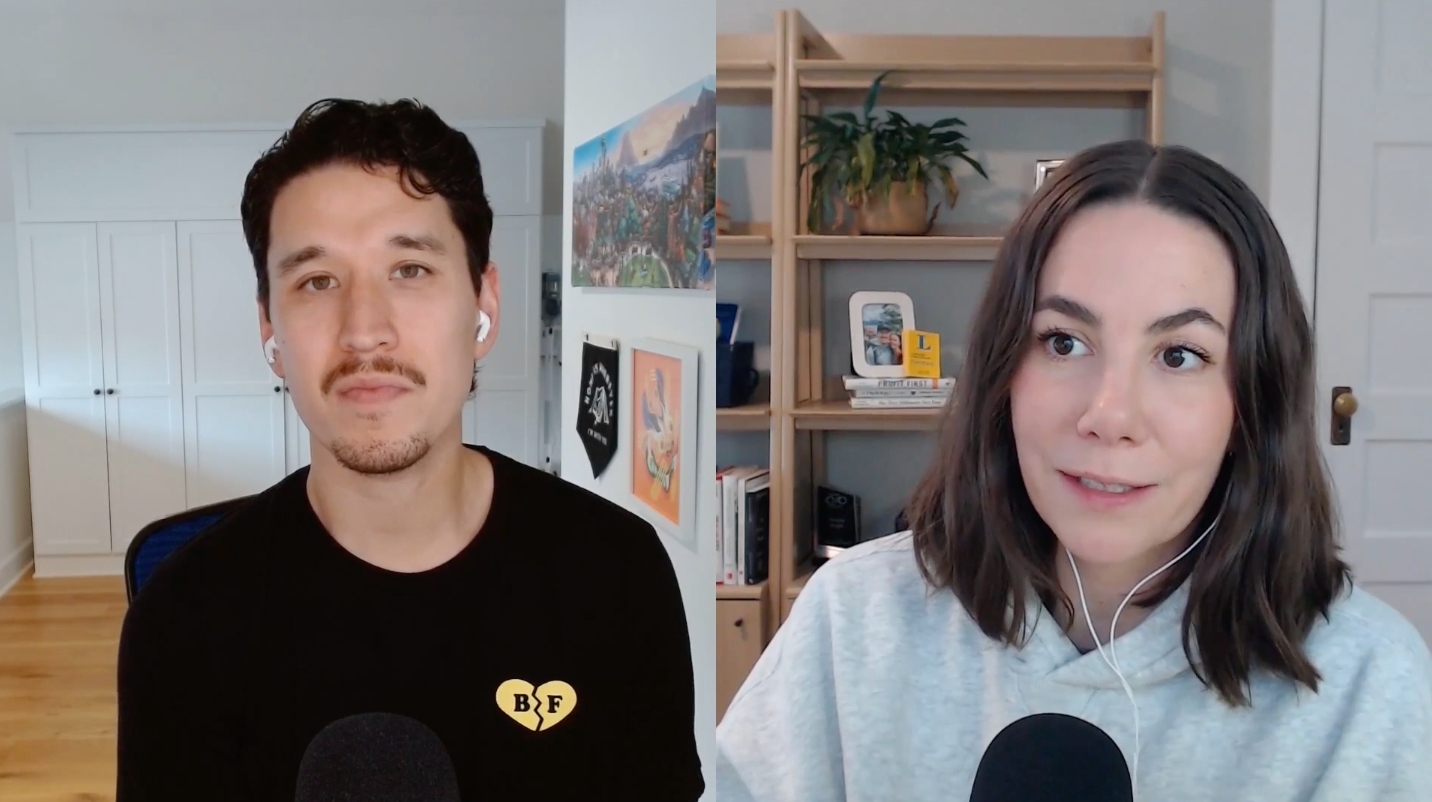
Our hosts, Natalie and Dan Slagle, get brutally honest about their own household spending, and explain why inflation might be the easy scapegoat when lifestyle creep is the actual problem.
After consistently overspending their $3,000 monthly discretionary budget (sometimes by $1,400) the Slages finally took a close look at their numbers.
The results were shocking: their spending has increased just 27% since 2018 (roughly 3.3% annually), but their bills have skyrocketed 193% over the same period. From $2,700 to $8,000 monthly, these "fixed" expenses reflect choices about location (Portland vs. Minnesota), childcare, and lifestyle upgrades they've made along the way.
Natalie points out that many expenses we consider "forced", like rent or daycare, are actually choices. They've increased spending above inflation rates while blaming inflation itself!
Dan brings up the generational shift. That is, previous generations lived with less, but constant social media advertising makes contentment nearly impossible. Every Instagram scroll presents another "necessary" purchase.
Their approach involves separating bills from discretionary spending using their proprietary cash flow worksheet. Expectations evolve. For example, having a house cleaner feels essential now, though their parents managed without one.
As income rises during peak earning years, people naturally want more "padding," typically exceeding actual inflation.
The solution is to get together with your spouse to do annual spending reviews, have honest communication about thresholds, and reframe "less" as "enough" while focusing on experiences over material purchases.
Key Topics:
• Examining Household Budget Categories and Overspending Patterns (03:52)
• Spending Data Since 2018 (10:29)
• Bills Increasing 193% from $2,700 to $8,000 Monthly (15:10)
• Fixed Expenses are Actually Choices about Lifestyle (20:59)
• Generational Differences in Expectations and Normalcy (22:02)
• Social Media's Role in Constant Consumption Pressure (23:24)
• Adaptation Psychology (27:24)
• Planning an Annual Money Date to Reset Expectations (28:52)
Resources:
• Cashflow Management System Worksheet (free resource)
Schedule a Free Consultation: Click the button in the upper right-hand corner
Join our newsletter to stay up to date on the latest financial resources
Natalie Slagle, CFP® and Dan Slagle, CFP® are the founding partners and lead financial planners at Fyooz Financial Planning — an independent firm dedicated to helping high-earning couples in their 30s and 40s confidently navigate the complexities of managing money together.
At Fyooz, they specialize in turning financial stress into strategy, guiding couples through everything from cash flow and investing to aligning money with shared goals.
Disclaimer: For updated disclosures, please visit fyoozfinancial.com.



(auto-translated)
Dan Slagle 00:00
And there's psychology behind it, right? Like, it's the idea of adaptation. Like, once you upgrade, it's very hard to downgrade, yes, impossible to downgrade, right? So, like, as soon as you upgrade, that's the new floor that you're setting. It's so hard to break through that and make adjustments, right? And again. Going back to the social comparison aspect social media influence every year, we just expect more and more comfort and convenience.
Natalie Slagle 00:35
Welcome to money dates, the podcast that makes money. Conversations with your partner feel a little less taboo. I'm Natalie Slagle, a certified financial planner, and I'm joined by my husband and business partner, Dan Slagle, also a Certified Financial Planner. Say Hi, Dan, hello. In each episode, we'll share honest stories and practical tips to help you and your partner feel more connected and confident on your financial journey. So grab your drink, get comfortable and join us for our money. Dates, welcome back. Hello, wow. We're excited to be here.
Dan Slagle 01:12
Jinx, you owe me a soda. Remember yesterday we were at the park, and what was there was a little note at the park. Her name was una, which is I I've heard that name before. It's a really cool name. Una was asking us what our daughter's name was, and then she asked you what your name was, and then she asked what my name was, and we both said my name at the same time. And she was she like, laughed. And she was like, Haha, you said your name at the same time, Jinx.
Natalie Slagle 01:41
And then that's when you're
Dan Slagle 01:43
like, you were like, now I owe you a soda. And I was thinking, like, Do kids still say that? Is
Natalie Slagle 01:50
that still a thing? Jinx? You owe me a soda, and we don't really drink soda anymore, so it's kind of a if you owe me a soda, well, obviously it's got to be a Diet Coke. That would be fabulous if you know, I was like, Dan, go give me a Diet Coke. I want it on my desk because I jinxed you. Do you feel like
Dan Slagle 02:10
there are things that you've learned in the one and a half years of being a parent where you're like, oh, that maybe that's not okay anymore. And that was one of those things that it just like, as we said, You owe me a soda. I immediately thought to myself, is that okay to say? Still?
Natalie Slagle 02:25
Why would it not be? It just might be dated in a way of like, nobody says that anymore. You're uncool,
Dan Slagle 02:32
of course, of course, of course. But you never know, like there's been efforts to reduce like vending machines in schools. I was just curious, because I'm just so out of touch. I feel like with reality of what a child goes through,
Natalie Slagle 02:47
well, we will soon find out once our daughter is at that age where you just know all these things, and it's talking non stop. Una was a lovely person. Dan, today I'm excited for this topic. We talk about inflation and expenses with our clients quite a bit, and this feels like a topic where we're, What's it saying? It's like, you're, you gotta, like, look into the mirror, or it's you gotta, kind of face your own reality and stop pointing fingers, a little self reflection, yeah, yeah. Because inflation, yes, it's there, and it it hurts, and I know a lot of us see it in our grocery spending, although I don't believe and I know now, because I looked up some data in anticipation of this episode, that inflation is not the problem. Our expectations are. AKA, we are the problem, Dan, and so we're going to hone in on that today.
Dan Slagle 03:52
Well, what? What stem this conversation? I feel like recently, you and I, over the past, let's say, two, three months, we've been really looking at the household budget that we use to keep track of our expenses, and not so much from like the fixed expense, right? Like rent, automatic bills, right? And by the way, plug we'll put in the show notes. We do have a worksheet available on our website to help manage cash flow, which is exactly what we use and follow. And I'll talk about here in a second. So we've been looking at our discretionary expenses, right? So our variable bucket, where no one likes to keep track of, right? So we're talking about groceries, clothing, trips, gas, you name it. Restaurants and restaurants. Thank you. Yes, some big ticket items. Also within our budget, we have a miscellaneous category, and that miscellaneous category gets spent. I feel like in a matter of a week, the variable bucket or discretionary spending, the parameter we've given ourselves, let's just be frank, it's $3,000 a month. I personally feel like it's been $3,000 a month for. Like the last five years, which doesn't account for inflation, which is the topic of today's conversation, inflation and managing our expectations, regardless, $3,000 a month now, with a one and a half year old, we overspend on that category every single month. Some months it's close. Other months, like the month we just had, we were going for a walk the other day, and you were like, how did we do on our spending? And I was like, yeah, we'll probably be, like, $1,400 over. And you were just, I feel like that. That pissed you off so much. It was, it was that much over our category. And remember, we're two certified financial planners, right? We're supposed to spend within our means all the time. Well, truth be told, that doesn't always happen. Case in point, last month, we were $1,400 over budget. You and I always give ourselves some wiggle room, some grace to say, Okay, if we're over a couple $100 that's fine. I feel like 14 definitely crossed that threshold. For you,
Natalie Slagle 06:06
it absolutely did. And Dan, that was a miscommunication on both of our parts. When were we $500 over? Why didn't we talk about that? When were we $1,000 over? Why weren't we talking about that. So I got frustrated, because it felt like there were opportunities for us to get to certain thresholds and say, Hey, we're going to overspend this month. Is this okay? Can we afford? Where is that extra money going to come from? And that's where I get frustrated, because I'm the one that that goes in and pays off all the credit cards, and it's not like the money just appears from nowhere. It has to come from something, which usually means we're not going to be able to save as much, which, right now, we're trying to save as much as we can. And so it even if the money is there, I have to navigate where it's coming from. And it just irks me because it doesn't go to plan. And I'm a planner, and I like it when things go to plan.
Dan Slagle 07:02
What are you going to do, though, if, even if we had that conversation seven days in advance of that walk that we took where I just dropped the bombshell of how much we overspent, what are you not going to go to the grocery store and buy groceries for our child?
Natalie Slagle 07:15
That would not be the option. You know that there's so many things that we purchased that I could hold off. And we've done this before, and I think this is what was happening before I had you take over. Kind of recording our expenses is I would say, Oh, we're getting really tight. I know we need toilet paper paper towels. And I would be that person that says, Well, we have two toilet paper rolls. So technically, we could probably go another few days, and I would make those stupid little decisions to do everything I can to mitigate the bleeding that I felt like was happening.
Dan Slagle 07:55
You literally just told our viewers that if you knew that information seven days in advance, that you would not buy toilet paper for our home.
Natalie Slagle 08:03
If we still had a couple rolls left, I'd be like, use the rolls, people and no guests over, because they'll use our toilet paper. No, I'm just kidding, but I would seriously. You know, there's just so many things you purchase that you don't need to have that day. You don't need to have it. And I think the that's kind of a mindset thing, though, I can easily go into scarcity mindset and just act like that when it's we don't have the financial situation where I'm I need to have a household lacking toilet paper. That's fortunately, that's just not what we need to have. But what came out of that discussion is a we need to communicate more about where we're at with our spending, and what you had communicated, which you've been trying to communicate to me for a while now, is we need to increase this bucket. We have been at 3000 for a long time, even before we had our daughter this bucket of money that we said, okay, we can spend this in a month. It's been at 3000 for too long. You haven't accounted for inflation.
Dan Slagle 09:06
So that's what I said to you. That's what, yes, it
Natalie Slagle 09:10
is true. Since we've had our daughter, we have not increased in diapers, wipes. And I think the big thing you know is because some people could be listening to this and they're like, Well, what about daycare? Because your daughter goes to daycare and we separate. So this is what Dan was talking about. We have this whole kind of cash flow management system. It's a worksheet. It's free. It's on our website. Just go grab it. We separate our bills. So everything we know that's going to happen, all of that, the daycare, the rent, the life insurance policies, the auto insurance that, like all of that is in our bills account. Okay, so that's different. This is our spending. This is the just the Amazon purchases, the groceries, like Dan was talking about. So the bills account has increased significantly, and I have all the data. I can't wait to share it. The bills. Account has increased significantly. The spending account has kind of been all over the place. So, Dan, what would you like me to talk about? First, our bills account and what that has looked like over the years, or spending account.
Dan Slagle 10:14
This feels like a trap. This feels like a trap. Let's go. Let's go. Spending. Okay, spending, because that's the biggest issue that we are personally dealing with from a personal cash flow standpoint.
Natalie Slagle 10:29
Yes, so spending this year. See, there's all these caveats to how we do things. So technically, our spending right now Dan is closer. You know, I kind of did averages, and I included what we send to, like our Dan and Natalie account. So all in spending right now is actually $3,800 okay, do you want to know what it was in 2018 when we first moved to Portland, we were making good money. We, you know, obviously didn't have a kid. What do you think it was our all in spending it was, it's 3800 now, what do you think it was in 2018 Okay,
Dan Slagle 11:03
seven years ago, no child 2018 is this what our limit was, or what we were actually spending kind of more of our limit? Okay, our limit then was probably $2,500 it was $3,000 in 2018 it was $3,000 yeah.
Natalie Slagle 11:22
And I'm like, man, we must have been living good. And so it went from $3,000 to then it was $2,000 for three years straight. And that was because that's when we first started our firm, and we made negative money, and then we made no money, and then we started making money. So is that $2,000 and then between 2022 and today, it's gone from about $3,000 to 3800 so if we get rid of the 2018 year, and we start counting from 2019 when it started at 2000 we have increased, on average, about 13% per year in our spending, which is higher than inflation. So not only have we kept up with inflation
Dan Slagle 12:11
and hold on, and you need to throw in the outliers of three years of when we were basically making no income and starting our business. So it doesn't feel like a fair representation to include those three in this stat.
Natalie Slagle 12:26
Well, you can't cherry pick the stats. Dan, that's not how this works. What I'm saying is the theme of this is inflation isn't the problem, it's us. It's our expectation. And then I was looking at that spending, the spending is a little funky, because we did have, like we had an amazing year in 2018 where being able to spend, what do we spend our money on? I think that's when we run went out to eat almost like every other night, it seems like. So the spending. Even with that, we have increased our spending by about 13% every single year since 2019 and you know, it's like it was, that's average, right? So, full
Dan Slagle 13:07
disclaimer, Natalie did not tell me any of these stats before this conversation, so I might develop some feelings, as you can I know, sharing.
Natalie Slagle 13:16
I like it. I want to, let's see it, Dan, I want you to get defensive. I want you to blame, you know.
Dan Slagle 13:22
Okay, so that's that everything so that spending. Talk about, what about bills? Do you want bills next?
Natalie Slagle 13:29
Yes, but I have to say this number because of spending before I talk about this number on the spend on the bills. So our spending has gone up 90% since whatever year I was talking about, since 2019 it has gone up 90% okay, 13% for you. So like, oh, here we go.
Dan Slagle 13:51
I'm just curious if the variable bucket was the same as what it is in 2025 that's a 0% increase. So you're telling me our spending has gone up 90% solely based on the bills.
Natalie Slagle 14:06
Then since 2019 No, no, no, no, no. Since so in 2019 our spending was 2000 so it's gone up 90% okay, maybe now I'm cherry picking.
Dan Slagle 14:19
Hold on. Hold on You started the stat at 2018 when income was relatively similar, and then you cherry picked to find a lower income year when we were more conscious of our spending.
Natalie Slagle 14:33
Yep, fine, okay, if we use 3000 which 3000 from 2018 that is a growth of 26 27% total, which is how many years is that? 12345678, okay, so our spending since 2018 has increased in total 27% which is a 3.3% in. Increase. That's different numbers.
Dan Slagle 15:03
That's big. Those are big changes. I win this argument. Just kidding. Anyways, go to the the bills, because I think you had some stats on bills too.
Natalie Slagle 15:10
Okay, so the bills in back in 2018 just, let's just paint the parameters today for our bills. This is rent, daycare, all our insurances, you know, just the things that you have to pay for your bills. Today, we send $8,000 a month to pay for all those things. In 2018 this is when we had a mortgage, so before we sold everything and moved in with my mom for cheap rent, in 2018 our bills was 2700 a month. Now it's 8000 a month. So our bills account has increased since 2018 193%
Dan Slagle 15:55
on average. That one I believe, yeah, that one I believe,
Natalie Slagle 15:59
because our mortgage was next to nothing. We didn't have daycare, we didn't have an auto loan. So back then, we didn't have an auto loan, and now we do have an auto loan. So even if our spending isn't going up a lot, where it has been going up a lot is our bills, and those are all choices we've been making along the way. We have chosen to live in a chosen, chosen, chose, whatever the word is, whatever the word is. We have selected to live in Portland, Oregon, which is a much more expensive place than Rochester, Minnesota, the place we lived when we launched our business, it's more expensive than St Paul, Minnesota, where we owned our first home. So that is a choice that we have made. And I feel like sometimes we look at the bills, and this is our clients, too. You look at your mortgage or your rent, and you kind of feel like those are all forced things, but the spending is where you can control. Well, that's not really the case you're choosing what kind of place you're going to live in, where you're going to live, what kind of child care you're going to have, where that's going to be and financially speaking, these increases are okay because our income has increased, our net worth has increased. So I'm not trying to, like, put blame on us, but I'm also trying to set the reality that we have seen a substantial increase in our bills account way above what inflation has set.
Dan Slagle 17:35
Hmm, I'm just digesting this, just as all of you are on the spot. So is inflation the problem, or our expectations the problem?
Natalie Slagle 17:48
Our expectations are the problem. And I don't want to use problem here. I don't believe you and I are in a problematic situation. I do believe we have continued to make choices that make our lifestyle more expensive, and we do need to be mindful. At what point do we reevaluate things?
Dan Slagle 18:11
Re evaluate everything. My
Natalie Slagle 18:14
goodness spending, I didn't say everything 3%
Dan Slagle 18:18
well I maybe I'm saying everything. You just drop this bombshell on me. I mean, let's take it back a little bit right, like we need to define inflation and expectations first stuff. So inflation, the increase in prices. We're all experiencing it as we have just shared expectations, what we believe our lifestyle should be able to afford, right? Even in the conversation of you and I talking about comparing data from 2019 when we first started our business, to 2025 you know, our variable spend was $2,000 in 2019 This is pre pandemic era. People recall that, and no income, basically coming into our household, and we were still giving ourselves the grace to have $2,000 of discretionary spending, whereas now, given what we make and are making, and we've shared that in previous podcasts, that even a $2,000 to a $3,000 doesn't seem to do it justice. But then those are my expectations around what I just said, what I believe our lifestyle should be able to afford.
Natalie Slagle 19:24
Now, yes, but again, you we do have to consider the entire equation, and that we also had our bills significantly lower. And so the you know, our spending was 2000 because we still had to have groceries, and we did everything we could to get our bills in 2019 to be as low as humanly possible. They were $885 a month. 885 now they're 8000 because it's it's just the reality. And I think. But going into this, you and I were both thinking about how it would feel really nice to increase our spending, this discretionary spending, and it could be, and maybe we could do that simply by just shifting what's happening in the bills account, and maybe we need to review what's happening over there? Because you really for any couple, you have to evaluate all of the outflow, not just one segment, not just your spending, not just your bills, what's happening collectively? And again, this, I don't think we're in a problematic situation, I think, and no, if the trend continued at the clip that it's going or it has gone on, that would be kind of devastating for us financially. So at some point, we need these numbers to level out, at least to a point that matches the increase in our income. That's what I have to say about that.
Dan Slagle 20:59
Right after this episode, I'm going right to our bills account, and I'm looking at what's going on over there. Anyways, yeah, I think this is really helpful, and something that we've been experiencing in recent conversations with clients a lot, right? It's regardless if it's if it's your fixed expenses or your bills, or your spending, or your variable, whatever you want to call it, you need to look at the picture as a whole, and life is just not getting any cheaper. That's the reality of the situation. Life is not getting any cheaper because inflation does exist, prices are naturally going to continue to increase. However, I think you and I, and probably a lot of our clients, also fall in the camp of I'm working really hard right now. I have bills to pay, I have children to support. I want life to be easier, and when those are the things that play, life is going to become more expensive, because your expectations are wanting it
Natalie Slagle 22:02
Yes, and the expectations on what is normal look a lot different for our generation than past generations. I just think about having a cleaner so many of our clients and us have a cleaner. And now I tell clients like, especially in our clients, that are doing really well financially, and they're talking to me about their time, and if I look and I see they don't have a cleaner, I'm like, Y'all got to get a cleaner. It's and it just seems so necessary for working parents. I don't know how other people do it, and that's the story I tell myself now my my mom or my dad might be like, well, we work just as hard as you. We didn't have a cleaner. We made and I, you know, growing up in the household I grew up in, I I always felt my home was fairly clean, so my parents were they were contributing a lot to that. I also remember vacuuming begrudgingly and not liking that, so I also contributed to the cleanly house. But what I'm saying is there's something to say about our expectations of what is necessary today looks different than what it did in previous generations.
Dan Slagle 23:24
Absolutely. I mean, you and I grew up on, I mean, I don't know what you grew up on, but I grew up on like Oscar Mayer bologna sandwiches with mustard and onion and wonder bread like no discredit to my parents, and sometimes I still crave one of those sandwiches, but that's also like a culmination, super disgusting, a combination of what they grew up on from past generations, right? So, and every generation is different. So if we shared this to our our families, or, you know, our the baby boomer generation, they could say they lived with a lot less and it was normal, right? But their sense of normalcy is so different than ours. If you and I grew up in their in their space, their surroundings, we'd call it like deprivation, right? Like we would not think it's okay. And it was interesting is, like, it's a generational shift. Like, that's how I view it. It's a generational shift, because they didn't grow up in a world of like rapid tech expansion and social media followings and just overall the growth of wealth that we've seen within our generation, and having the presence of going back to even like social media, like all the people you follow online, I don't know who you follow online, but a lot of people follow, like fashion influencers. There's just so much product, product, product that's being thrown out to us, and I'm saying it's a bad thing, but I think that also leads into a little bit of like, you cannot be content. You. At all times. You know I'm saying, like, even for me as viewers, listeners know, like, I'm super into running. So literally, my Instagram feed is just constantly whether it's like a cool account I found it's just like, here's the next new product. And immediately I get the dopamine hit, or whatever you want to call it, and I'm like, I gotta get that pair of shoes because it's gonna make me faster. Yeah, I gotta get that shirt because I want to look cool when I run. And that is really hard. Like, I feel like so much of our generation has to go, like, go through with that. And it's not even just for us. It's like, you and I as new parents now, on our social media feeds, it's like, Hey, here's this new, amazing Nordic style play place for your child that they're gonna love. And you're like, I gotta get that too. So, you know, I don't mean to go on a tangent around like, the things that we're having to deal with, versus like what past generations had to deal with. But it absolutely is at play when we think about our expenses
Natalie Slagle 26:08
and when we think about how inundated we are with advertisements, and it takes that much more resiliency to evaluate, do I need this or do I not? And so maybe it's maybe, you know, inflation isn't the problem. We're the problem, but we're also the problem because advertisements live in our pocket. Advertisements live in our hand on our phone, and you can't go on any platform now without being advertised to and at some point, when we put our daughter to bed and we're just on the couch and we're both scrolling, it's just, how do you how do you not just be like, Man, it's been a long day. I want to just purchase something and feel good about it, and I think that not to give ourselves excuses here, but there's something to that on it's a little bit it seems more of a battle that we have to endure compared to how it previously was, even compared to, not even to previous generations. But when I think back to 2018 I don't think we were nearly as inundated as online advertisements as we are now, right? And
Dan Slagle 27:24
there's psychology behind it, right? Like, it's the idea of adaptation. Like, once you upgrade, it's very hard to downgrade, yes, impossible to downgrade, right? So, like, as soon as you upgrade, that's the new floor that you're setting it's so hard to break through that and make adjustments, right and again, going back to the social comparison acts aspect social media influence, every year, we just expect more and more comfort and convenience, especially like in who we're working with, clients in their late 30s, early 40s, mid 40s, even like these are We're entering like that, the peak earning years of our working profession, of our lifetime. And when you start to get communication around raises, new stock compensation, whatever it is, inheritances, you want to give a little more padding to yourself every single year, regardless of what spending has looked like in the past,
Natalie Slagle 28:21
and that padding, even as we've seen it for ourselves, that padding tends to be more than what just inflation is. It's your mental reward for yourself above and beyond inflation.
Dan Slagle 28:32
Yeah, so like, how would you think about going let's say, in our example, we've been overspending. I want to blame inflation. You're like after this, you're like, No, it's my actually kind of my expectations. How would you like reset? Or think about it going forward,
Natalie Slagle 28:52
I would say that we should increase our spending annually and but we need to do it in a way that is also balancing what's happening on the bill side, just the constant touching base of what is happening on both sides. Are we in agreement with the dollar amounts assigned and what changes should take place going into the new year, right? Like this. This episode is going to air towards the end of the year, and it's just a great time to evaluate what's been happening, what's working, and what's not. So I think in this is why, you know, I don't think this week, or maybe next week, you and I are sitting down for two hours on our calendar, Friday at noon. I cannot wait. We are evaluating our business finances. We're evaluating evaluating our personal finances.
Dan Slagle 29:55
One might say we're having a money date. Look at you.
Natalie Slagle 29:59
Yes, absolutely, we will have our money date, and that'll help us kind of evaluate and think about, how do we look at 2026, and evaluate our our spending, and maybe not blame so much inflation, but also look a little bit inward too about our expectations around it all
Dan Slagle 30:20
too. That's really important, right? It's like, just understand your expectations, reframe them for going forward, right? Really reframe less as maybe enough, right? Like, rather than using the word less, it's just, I have enough, keeping track of expenses, like doing what we're doing next Friday, literally getting prepared for 2026 and saying where do we need to cut back, or where can we improve, or make improvement as a household? And then I think we should also be thinking about creating, like, unique markers of success going forward. Maybe it's not material, right? It's more experiences, stability, time, right? Like, what are these expenses, these inflationary expenses? Like, how? How are they truly impacting us? As Is it worth it and just analyzing it that way?
Natalie Slagle 31:11
Yeah, that makes me think of our time yesterday. We making it all come full circle when we were at the park with this dear una I was so happy just we walked to this park. And this was the second time we were at a park that day, and earlier in the day, we went to a different Park, also just a walk away. And I was, I was feeling so grateful that we were in a place where we could a have the time and energy and health and all of the things that what it takes for you to be able to walk to not only one great park, but two great parks. And that, I mean, it costs money to live here, that's one thing. And beyond that, it was, it was a pretty inexpensive day in itself, and that made me very happy.
Dan Slagle 32:03
Let's round it out. I think you know inflation after this conversation, well, you and I are going to have a lot to talk about after this conversation. I'm excited. I feel like inflation changes the numbers, right? But like, our expectations can change, like our peace of mind.
Natalie Slagle 32:21
Yeah, absolutely. Well, I'm excited to continue this conversation offline with you. Daniel Slagle,
Dan Slagle 32:27
can't wait. Natalie Slagle,
Natalie Slagle 32:31
all right, see you next time. Bye.
Dan Slagle 32:37
Hey, if you've enjoyed this episode and are looking for personalized financial guidance, schedule a free complimentary consultation using the link in the description below. Natalie and Dan Slagle are the founding partners of Fyooz Financial Planning, a registered investment advisor. The information provided in this podcast is for informational purposes only and should not be considered investment advice or a recommendation to buy or sell any securities. Investing involves risk, including the potential loss of principal. Advisory services are offered to clients or prospective clients where Fyooz Financial Planning and its representatives are properly licensed or exempt from licensure. For more information, including our disclosures, please visit our website at WWW dot fuse financial.com.


