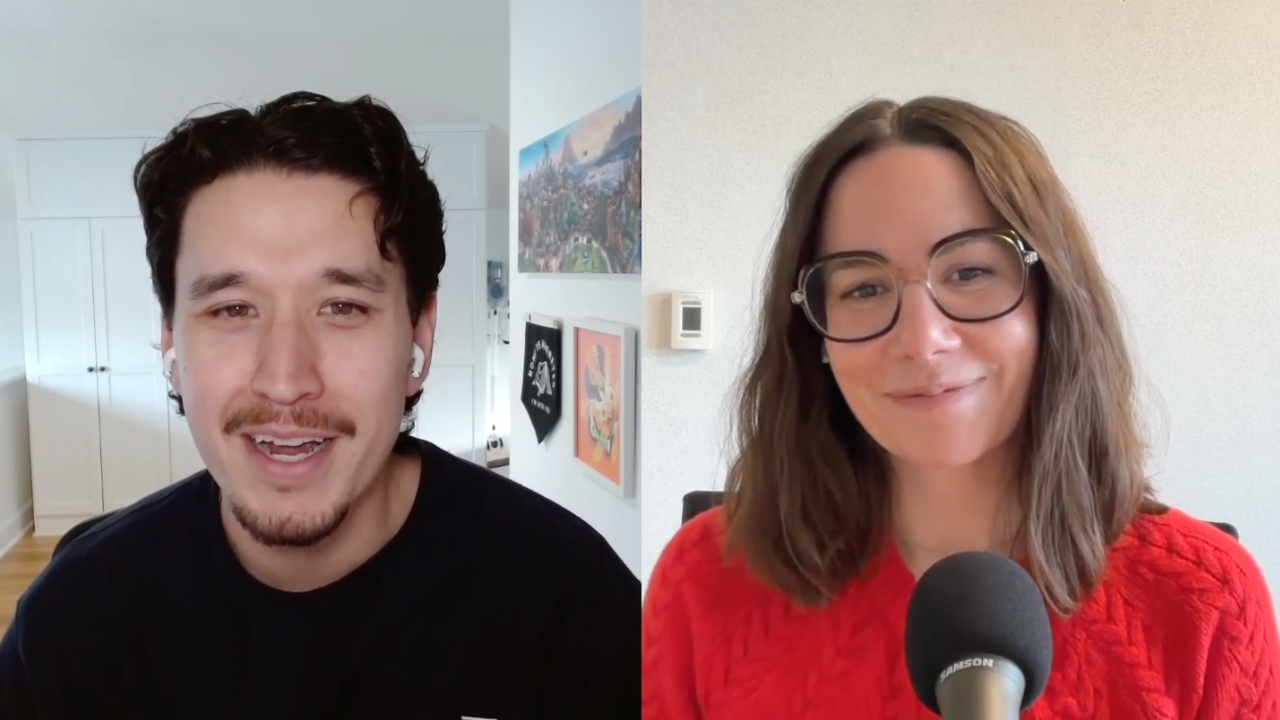
“It’s one thing to talk about the numbers. It’s another thing to actually look at the homes that you’re purchasing for that price point.”
What happens when financial planners face their own home-buying crossroads?
Our hosts, Natalie and Dan Slagle, pull back the curtain on their decision to walk away from homeownership despite having the pre-approval, down payment, and professional know-how to make it happen.
Their landlords planned to sell by June 2026, later moved up to March. The Slagles targeted a monthly mortgage of 20% of household income.
But reality hit hard. Nearly million-dollar homes came with unfinished basements, century-old infrastructure, and compromised locations. Dan openly admits his MTV Cribs-era expectations didn't match Portland's housing market. Also, the competition at their price point contradicted everything they'd read about soft housing markets.
The Slagles aren't anti-homeownership. Dan candidly envisioned an 18-year family home followed by downsizing near their daughter's future city. But prioritizing flexibility, financial breathing room, and intentional resource allocation won over societal expectations and professional optics.
Sometimes the wisest financial decision is recognizing when the timing simply isn't right.
Key Topics:
Resources:
• Homeownership vs. Renting: The Good, the Band, and the Budget (episode)
Schedule a Free Consultation: Click the button in the upper right-hand corner
Join our newsletter to stay up to date on the latest financial resources
Natalie Slagle, CFP® and Dan Slagle, CFP® are the founding partners and lead financial planners at Fyooz Financial Planning — an independent firm dedicated to helping high-earning couples in their 30s and 40s confidently navigate the complexities of managing money together.
At Fyooz, they specialize in turning financial stress into strategy, guiding couples through everything from cash flow and investing to aligning money with shared goals.
Disclaimer: For updated disclosures, please visit fyoozfinancial.com.



(auto-translated)
Dan Slagle 00:00
Yeah. So rather than losing the the potential stability of a home, right? It's, it's reframing that going from loss to true intention with your dollars. And again, we're not like poo pooing on I say poo pooing because, you know, I've been changing diapers all weekend while you were away on your retreat. That's just like, that's what's out my mind. Okay, bad joke. We think about, what are we gaining from the decision of not buying a home and deciding to rent? We're gaining flexibility the time, maybe a lower mental load, cash flow is impacted absolutely and again, the ability to say yes to some of these other goals that you're talking about.
Natalie Slagle 00:46
Welcome to Money Dates, the podcast that makes money. Conversations with your partner feel a little less taboo. I'm Natalie Slagle, a certified financial planner, and I'm joined by my husband and business partner, Dan Slagle, also a Certified Financial Planner, say Hi, Dan, hello. In each episode, we'll share honest stories and practical tips to help you and your partner feel more connected and confident on your financial journey. So grab your drink, get comfortable and join us for our money. Dates. Hello, Dan, hi, Natalie, how is your January going so far? That's a boring question to ask. Come on. Okay, well, what's a more exciting question then? Why don't you ask me a question? Well, I
Dan Slagle 01:34
think for those of our audience that are watching, they may notice you have a little bit different of a background. And I actually laugh when I say that, because there's literally nothing in your background. Where are you today?
Natalie Slagle 01:46
I am at our new office, and this is an exciting new venture for us. We actually did have an office space that we worked out of when we first launched our business, and then covid happened, and then we were just like, Okay, we'll just operate our business out of home. Going forward. Well, years and years went by. And finally, as of 2026 Fyooz financial planning, or at least the employees, Dan and Natalie cycle, now have an office to work out of. So I'm really pumped about it, but it takes time to decorate it and make it look like your own, and we also needed to make sure the financials worked. And so part of the discussion today on why we decided not to not buy a home impacted our decision to get a co working space. So that's why my background looks different. And I'm excited to talk about how we got to this point, in regards to the decision to not buy a home as well.
Dan Slagle 02:50
It looks really good more so your red sweater that you're wearing it like very it very much pops against the white background,
Natalie Slagle 02:58
isn't I think my color of the year is red and not like a dull red, like a bright red. Red looks really good. And I think I've always steered away from red because, as you know, Dan, my sister is obsessed with the color red.
Dan Slagle 03:13
I was just gonna say she would be very happy that you just said the color of the year is going to be red for you.
Natalie Slagle 03:19
Yes, yes. And I've always felt like that's her color, that's her thing, and that's like her staple thing. Like I didn't ever want to compete against that, or, you know, I didn't feel like I could ever be a red lover, because no one can love red like my sister. And so it just, you know, but I think, to your point, Dan, she would actually be extremely happy to hear that red is my color of the year. And I don't know if it actually will be, but I like the way I look in red, so maybe
Dan Slagle 03:50
you look very nice. You look very nice, and red wouldn't Taylor Swift rival your sister in red? Doesn't she have a red album? Or am I just making things up?
Natalie Slagle 03:59
I'm not as big of a Swifty fan as I would like to be,
Dan Slagle 04:03
you just lost all of our audience.
Natalie Slagle 04:05
I'm sorry. I love Taylor Swift, especially as a business woman. I think she's a fantastic businesswoman, and I enjoy her music, but I again, it's one of those things I'm like, but I'm not a I can't even call myself Swifty, because I don't know enough about her music to earn that title.
Dan Slagle 04:23
I just kind of put it out there because we're on the topic of Taylor Swift. I was a Swifty before being a Swifty was a thing. I went through this country phase in like, 2006 2007 I had her initial CD. It was a CD at that time for all of our younger listeners. I don't remember the name of the CD, but it was definitely one of the first purchases I had. And I remember what walking around with. I think it was my is that a Walkman? I'm like, totally blanking. It was like a CD Yeah, it was like a CD player. I remember, like, walking it was so. Long ago, but yeah, that's that's my, my claim to fame and in the Taylor Swift universe.
Natalie Slagle 05:05
Okay, well, great, let's move to the topic of conversation. Dan, okay, all right, fine. So we decided not to buy a home, and if you listen to our podcast regularly, you already know this, because we've said it a gajillion times, and we said we're going to have an episode about it. We're going to talk about all the things, and this is it. This is where we're going to kind of reveal how we got to that decision, the emotional, the technical side of things. What this isn't an episode of is renting is the best and buying a home is not the best. That's That is not what this is, whatsoever it is. It is really just a reflection on our journey with this decision, in hopes that it can encourage people to think through these big financial decisions in a very intentional way that I that I think we took upon ourselves during this whole process.
Dan Slagle 06:01
Yeah, it's not another rent versus buy spreadsheet episode, right? Like, yes, we're going to talk about the numbers and technical aspects of it, but we also need to couple in the emotional side of why we decided to not buy a home. So that's, that's definitely what we want to hit on in today's episode. I feel like, you know, looking back at at the entire process, like thinking about that moment of not tension, but just like that, that moment of having, like, we had the pre approval, we had the down payment, and we still walked away. And I want to get into that.
Natalie Slagle 06:42
Let's get into it. Well, I think first we should kind of give some background, because it's, it's an important part of of the decision. How we got to our decision? So when do you think home buying became the plan and what we wanted to do Damn
Dan Slagle 07:01
I feel like it was a few years ago, you know, and we could probably look back to this spring of 2024 so we're almost talking about two years ago at this time frame. And we were made aware that the owners of the home that we're renting, they would either be repossessing the home or selling it in the summer of 2026 so they had actually put that into the lease due to certain city laws here you need to make that known for your tenants, if that is the plan you have going forward. So like,
Natalie Slagle 07:34
did it looking at 26 feel like an eternity? I was like 2020 26 and this was in 2024 so June, 2026 I felt like that seemed so long.
Dan Slagle 07:48
It was, it was, and we had some other things going on, right? Like we moved into this home, out of our apartment, because we knew we were going to have a child. That was the big driving factor into making this decision. So obviously, yeah, 2026 just seemed like a worlds away because of just like entering this unknown and into parenthood.
Natalie Slagle 08:11
Yeah, absolutely, absolutely, so we so we signed this lease knowing that 2026 was coming, but it felt like a really long time away. And then the fall of 2025 came, and it's like, oh, shoot, we are less than 12 months away from something needing to happen and and the situation at play was the owners of our home said that they are going to sell the home. And, you know, lucky for us, they were like, we would love to talk numbers with you, because if, if we found the, you know, if you love living in the home, maybe you want to be the ones to buy it. And I really, really appreciated that, because it gave us a, potentially, a really great opportunity. We talked about how much money we could save if we didn't involve realtors, but that's side note. That's not always the best way to go about these things, but we were just kind of spitballing about how this could be advantageous for all the parties.
Dan Slagle 09:11
Yeah, and I feel like this definitely sparked, like, the idea of, Okay, our next step, regardless of, like, what we decide with the current owners of this home that sparked the idea of, well, our next step is likely going to be buying a home, whether it's the one we're in or a different home, exactly.
Natalie Slagle 09:31
So we, we met with the owners of the home that we live in now, and we said, Okay, we it's time to go get our pre approval letter. It's time to go through that process. And we also knew at the time, in order for us to kind of cover our bases, it's, I don't want to be tunnel visioned into thinking the home that we rent right now and the home that the owners are like, Hey, you could buy this home. I don't want to tunnel vision and not consider other homes. So we met with. Realtors. We met with a broker, we got everything lined up, and we got our pre approval amount and our and we talked to the mortgage broker quite extensively about what, what a mortgage payment, what an appropriate mortgage payment would be. And out of that conversation, we discovered the home that we're currently renting is out of our price range, and so that now, now that's off the table. And then the next part, a big part that impacted our decision, is that the homeowners also said, Oh, and by the way, we want to scoot up the timeline. So we said June of 2026, but now it's more like March. We're like, Oh, it is time for us to make some big decisions here. And so that's what really made this whole home journey experience move pretty quickly,
Dan Slagle 10:59
yeah, and to be fair to the current owners of of the home, like they're just wonderful people and super flexible, obviously, even entertaining the idea that they would just want to do a deal with us, not involving certain parties, to make costs as low as possible, like that was we. We welcomed that conversation. I'm glad we had that conversation, because there was more to uncover from it, and their decision to push up the timeline a few months wasn't in their best interest, right? Like it when we think about typically, what we see with the housing market, well, if you put your home on the market potentially, like early spring, that's when things start to get hot, or at least that's what we've heard from realtors that we are connected with. So I have no ill or bad feelings of their their decision to do so,
Natalie Slagle 11:46
no, not at all. It was, I think I, you know, in that moment, I was like, Oh, shoot. You know, instead of having six plus months to figure out a plan, it has now been cut short. But to your point, they were really gracious about it. They did give us plenty of notice, and it obviously all worked out in the end anyways. So then what happened?
Dan Slagle 12:07
Well, at this point, right? We knew this, and maybe you already said this, but we were, we were under the impression of it's not going to work, so let's just go buy a home. That just seemed like the next step in the process, right? So we had our realtor, we had our mortgage broker, and we just we went for it
Natalie Slagle 12:27
before we share kind of more of what unraveled here in this story. I think we should pause and talk about what home ownership means to both of us and why it did feel like an important next step to us. So I think about home ownership and and kind of you know, not not even focusing on the financial benefits, but really the emotional and outward appearance benefits. And I have felt that as financial planners, as business owners, as people who work in and out of client financial situations. It's almost like, well, all of these, all of our clients, not all, but a lot of our clients have homes. You know, this is kind of this proof that we're making it financially. And that was a that's kind of a big thing that I've, I'll just say, struggled with is it has felt like this next step to show our maybe I, you know, I don't even like thinking about us showing our outward wealth, because we actually are really good about not being showy or flaunty. But it almost felt like this accomplishment that, to me, was a story I was playing in my head of what we've done. We have a successful business. We make good money, blah, blah, blah, blah, blah. This is now the proof of all of that.
Dan Slagle 13:52
You just wanted to prove to the world that you were an adult, officially, like you were entering a dog you wanted, you wanted to prove to your your family, all your friends, you want to show Look at, look at my beautiful home that I officially own. That's what you want.
Natalie Slagle 14:06
It I did. And you know, there's the other feelings of, we have a daughter, and we want to create a stable home environment for her. And we both grew up with that. We talked actually at length about this in our home ownership versus renting. So we do have a whole episode. You should go back and listen to that if you haven't actually one of our most highly listened to episodes so far. So it's a really good episode, but it really dives into just this itself, like, What does home ownership mean versus renting? And you know, there's a lot of a lot of good feelings that come with home ownership.
Dan Slagle 14:45
Yeah, I think what did I say in that episode? Just like you wanted to, I think you were reflecting on a having a place where we could, like, keep track of, like, the height of our daughter as she gets older, like the little ticks. There's just like. Take off, take off, the day, on board, and move it to a different home. Anyways, go ahead,
Natalie Slagle 15:06
yeah, okay, so you know there's, there's these stories. Well, Dan, I kind of shared some of the thoughts on my side, like, what did home ownership, regardless of the numbers, but what did it mean or show to you? For us,
Dan Slagle 15:19
to me, to me, it showed, it had the potential to show stability and like a common fashion more so of like, how we were raised, what you were just talking about, and what you see in the in the world, and thinking, Okay, if, if we have this place that we can call home, it's providing for stability for the two of us for our family, and that that was really what sparked the home ownership concept to me, and wanting that right, wanting it potentially again, as we've reiterated in the past, we have previously owned a home, and there's reasons why we haven't ventured officially back into into that territory yet. But for me, that was, that was the biggest reason. It also stems from like, can I be a Am I being a good parent? Am I giving my daughter an environment where she can thrive? And can I lock in the as much as you can lock in the school districts like the obviously, the boundaries are always up for redrawing at any point. But a lot of those things just came to my mind, right? And you almost like, have this sense of like, here's what the future can look like. So by making this one decision today, everything that I have in my imagination of what the world will look like over 18 years, while our daughter is being raised in our home, is going to happen. And I think that's a little bit naive from my perspective to have thought that
Natalie Slagle 16:42
it could be but there is a sense of security that I think everyone craves in different facets of life. And to me, what you just said like, I was like, Oh, Dan actually really wanted the security of knowing these certain things that you know when you when you own a home. And I didn't, I didn't know that. So thank you for sharing. Yeah, let's talk about the numbers. And because I think this, this part is interesting, and obviously this is one of our our dedications is to be open about the numbers when it comes to these types of conversations. So we were approved to purchase a home for 940,000 our down payment was about 140,000 and our goal was to get our mortgage payment to be $6,000 a month or less. 6000 was the cap, because $6,000 a month in 2026 would represent about 20% of our household income. And one of the things we have noticed through our experiences with clients is the textbook, you know, a lot of people are like, how much house can I afford? And it's 28% I think, is what the CFP Board, Certified Financial Planner board says is, you know, go around 28% of your of your gross income, and what we have experienced personally and professionally is that's actually a little high for all the other competing aspects of your resources and income. So we have found our clients are most comfortable when their housing payment is around 20% and so for us, we were like, great, we could have a $6,000 a month mortgage. That's the highest. So how the numbers all worked out is we didn't even lead with this is how much house we wanted to buy. We led with, we don't want our mortgage payment to be $6,000 or more. And here's our down payment. You go tell us how much house we cared so much what that mortgage payment would look like. And so, you know, financially speaking, we were in a position and really grateful that that is what we could afford. When I say those numbers out loud. Dan like, how do you how did you feel about it?
Dan Slagle 19:02
Well, it's one thing to talk about the numbers. It's another thing to actually look at the homes that you're purchasing for that price point, right? Like growing up, I remember what the idea of a million dollar home, let's round up a million dollar home would would look like, and I blame MTV cribs for what they showed me as a teenager, right? Like, I just feel like if I buy a million dollar home, I should have a finished basement, I should have working new HVAC system and a new roof. That wasn't what I was obviously thinking about as a teenager watching MTV Cribs. But you get the you get the point right, like I expect for a million dollars, that my dollars are going to work very hard for me in terms of the things that I'm able to obtain within my household. And honestly, after starting the home search, it just wasn't it. It wasn't it. We were looking at homes that had. At unfinished basements, old homes from like, the early 1900s and I just was, like, kind of underwhelmed with not kind of, I was underwhelmed with the things that we were seeing. So to put that into perspective of, you know, keeping a mortgage payment at under 6000 that's fine, but when the when the home price is close to a million dollars, again, it just like there was nothing exciting that I saw, right? Like the excitement came from maybe the neighborhood the home was in, or, like, seeing a home where there's like a swing on the tree next door, so it's like, oh, there are Kids Next Door, right? Like, those kind of things excited me. But yeah, there was never one home where it was like, you and I immediately saw and we were just like, This is it,
Natalie Slagle 20:54
and it checks all the boxes. And I think no matter what price point you have, there's never a home that that will check all the boxes. I should say, never, you know, maybe, but that was a really eye opening experience on we're purchasing almost a million dollar homes, which seems insane, insane, and yet we had to just say, like, Oh, this is on your list of priorities. You can't have all the things. And that was frustrating. It was super
Dan Slagle 21:29
frustrating, like there's no there's no other way to put it. And I also feel like you and I have been burned by past experiences of purchasing a flipped home and not understanding anything about home ownership and and having that in our mind, even there was one home we saw where it was like seemed pretty move in, ready, and that was a home we actually put an offer on, yeah, but I feel, I still feel like we were a little skeptical of that home, even having put an offer in. You might be asking, Why did you put an offer in? Well, there, there comes a point where there's only so much inventory that's hitting the standards of what you want to buy, whether it's price, neighborhood, location, school district, and there were few and far between on options of the homes coming up, right? So when we saw one that checked a good amount of the boxes. I still think there was some hesitancy that you and I never even fully recognized in putting it in offer, in Yes.
Natalie Slagle 22:30
So to now get the listeners caught up on where we are at in our journey, in our story, we went on. We toured many houses as anyone would. We looked at so many different postings, and we did put two offers in. So we we found one house, and we were the second highest offer. We found out some details of the first offer that made us feel really confident that we were glad we didn't get it, because the people who did get it put more risk on the table than we would have ever felt comfortable. So that that was kind of nice, just like, oh, like, they're willing to take that risk on we're not. That's fine. And then the second home had it was way underpriced, so it had a gazillion offers. So I think we were like, fifth, fifth in the in the process. And then it was kind of it kind of was the sense of, like, I'm glad we didn't get it. And so after the second home, and then anyone who's purchased a home, they know that experience of, okay, you got to meet with the realtor, you got to create your offer that takes a few hours, and then you send it, and then there's just this waiting period. Oh my gosh, that waiting period is so stressful. And after we got our second No, you did not get this home, that's when we started to evaluate, is this really the next best step for us? Are we? And we started to go back to the numbers, and we started to ask ourselves, what would it look like if we decided to just keep renting instead? Because that felt that question hadn't really come up. We just thought, Oh, we're gonna buy and so that's just gonna be what happens. But I feel like, Dan, you actually led that charge to say, Hey, I think we should meet, look at the numbers together and really evaluate if this is the best decision for us.
Dan Slagle 24:28
I appreciate that acknowledgement. You're
Natalie Slagle 24:31
welcome. Thank you. Thank you where credit is due.
Dan Slagle 24:35
Only one is public facing. You never tell me that to my face alone, the reason why I decided to lead that charge and ultimately help locate the home that we are moving into. And, oh, I don't want to ruin Is this a spoiler? Did I just ruin it? No, you're fine. Daniel, okay, so with the home that we ultimately decided to rent, you know, we found it pretty early on in the process of exploring that alternative. Compared to buying a home and, and, yeah, we, I mean, we looked at the the numbers, and rather than having 2000 extra go toward the mortgage payment, monthly mortgage payment, it was going to rent. And the other, the other piece of it too, was like,
Natalie Slagle 25:15
wait, wait, wait, I want to back up clarify, because I don't, I don't think we, we have said that directly in this podcast right now we pay $4,000 a month for rent and the home. If we were to buy a home, our new housing expense would go from 4000 to $6,000 a month. Okay, and so that then we started to go, Well, if we rented and we rented about the same price, what does that mean for us financially.
Dan Slagle 25:41
Yes, spot on. Thanks for clarifying that. Now I lost my my train of thought, so once we found the that was obviously a piece of it. I mean you and you and I haven't even gone into the details on once, we had initially thought that we were going to purchase a home, and after that first offer we made, you and I had a majority of our down payment invested in the stock market, right? And again, this is just, this isn't advice. This is real life experiences of how we handled this. We liquidated a lot of our brokerage account, our joint brokerage account, in order to make sure that the funds for our home purchase were liquid in the event that we actually our offer gets accepted
Natalie Slagle 26:20
and not susceptible to market risk, because, yes, the market has appreciated quite a bit. The opposite could have also been true, correct?
Dan Slagle 26:30
Absolutely So again, when we thought about the process of, hey, we could save X amount compared to a mortgage payment versus rent, in addition to keeping this money on hand and not depleting these assets that we've worked so hard to accumulate, right? Like that was a big factor into it, and thinking about, okay, if we going back to the beginning of the episode, if we decided, okay, we're going to save this money, we have more now, cash on hand, since we're not having a down payment, where can we be better utilizing some of these dollars? Hence the office that Natalie is sitting in today.
Natalie Slagle 27:08
Yes, yes. We looked at so, you know, we obviously financial planners. We map out what our finances and expenses and savings goals and things like that are going to look like each year, and it was just a matter of turning that, that figure of the housing expense from 4000 to 6000 and say, No, you know, everything maps out. We can afford this according to the spreadsheet. But then when we turned it back down to well, what happens if we just kept our rent at the same amount and didn't have 2000 it was pretty eye opening. And to your point, Dan, that's when we could look at our list and say, Well, what other priorities do we have that extra $2,000 a month could go to? And one of the things was, I really I'm going to say I here, and I know you agree with me, Dan, but I want to give you a second to just say your input. But I really wanted to just get out of the house more. I wanted to meet other professionals and just, you know, legitimize what we've created, which is why, seeing the figure of, oh my gosh, we have all this surplus. How do we turn that surplus into something that's meaningful and that aligns with our values? Getting an office space was one of those ways, yeah.
Dan Slagle 28:33
So rather than losing the the potential stability of a home, right, it's it's reframing that going from loss to true intention with your dollars. And again, we're not like poo pooing on I say poo pooing because, you know, I've been changing diapers all weekend while you were away on your retreat. That's just like, that's what's out my mind. Okay, bad joke. We think about, what are we gaining from the decision of of not buying a home and deciding to rent, we're gaining flexibility the time, maybe a lower mental load cash flow is impacted absolutely and again, the ability to say yes to some of these other goals that you're talking about. So again, we're not this isn't meant to say, oh, buying a home is our home ownership is not the right option. It's just not the right option for us right now, and it doesn't mean you and I are not going to revisit the idea of buying a home. I think what almost like I recall conversations when you and I would go on walks, I was in the mindset of, Okay, this next place that we buy this is before we decided not to is likely going to be a home that I could live in for 18 years, and then in my like dream world, I'm like, and then you and I will sell whatever we own at that time and wherever. Jay, if she decides to go, that's her daughter's name, by the way, if she decides to move abroad, or if she decides to. Go to school in New York City, whatever it may be, you and I, we're just gonna buy a little condo like nearby, right? So I don't think the home purchase for me was, was ever I'm gonna buy this and I'm gonna be in my home until I die, because I just don't think that's realistic. I don't think that's how life actually works. So for me, I was preparing myself that this could be an investment, it could be a long term option to buy a home, but it what it just was not right for us
Natalie Slagle 30:34
at this point. Yes, I was laughing in my head when you were saying that because I was thinking, maybe Jay will listen to this when she's 17 and looking at colleges. And we're located in Portland, Oregon, and she's going to be like, how do I get as far away as possible from my crazy parents? And she's going to look at colleges in New York or something. And then she's going to hear this and say, it doesn't matter. They're just going to move and follow me.
Dan Slagle 31:01
She's gonna hear that, and then we are going to do it and surprise her. That's, that's what I have in my mind.
Natalie Slagle 31:06
Okay, so be prepared, my lovely daughter. Yes, we know that even our Realtors, they're like, just so you know you're not gonna because I was even looking at, you know, obviously, looking at elementary schools in the school district, but I was even looking at high school, and our realtor was like, knowing what I know about your situation and how most of my clients operate, how young your child is, you're likely going to move out of this house. And I think that was valid advice. And I think she's more not that she knew, but I think that was, she's probably more accurate in that statement than not.
Dan Slagle 31:41
It's valid advice, and I think it's also important into our decision of not to buy a
Natalie Slagle 31:46
home, right? That statement didn't lead us to not buy, but it did give me a okay, you know, 940,000 Dan, and I thought we could get our dream, dream home. And the reality is, in the West Coast, you can't, you know, dream homes, it's obviously everybody's parameters look different, but, you know, the reality was we would have to make exceptions, and then maybe in our next home in 10 years, that that would be when we get our definition of a dream home. And there's so many ways to slice and dice this, because I was even, I was even doing the math, and if we wanted you know, if the whole thing was about cash flow, then someone could say, Well, Dan Natalie, why did you have such a high purchase price? Why not go from 940,000 to it would have to be about 700,000 a purchase price of 700,000 for our mortgage to be $4,000 a month. And we have really strict priorities on where we live, and one of those is the neighborhood. Are we able to be around other families? Are there good schools? Is there walkability? And there are certain pockets of the city we live in that hit those ramifications, and of course, they end up being the most expensive one. So we could have, we absolutely could have found just a wonderful home at the 700,000 purchase price, but we would have had to give up the ideal neighborhood and walkability and that that was a non negotiable. It's a non negotiable if I'm going to live somewhere, you know, you I've just been seeing these articles about how where you like, literally, the location is so important, so much more important than the number of bedrooms and the number of bathrooms. Like, when you think about someone being happy in the place they called home, location is such a huge driver of that, and so that was a non negotiable for us. And at this point too in our decision, it just felt like the numbers were speaking to us our values of flexibility, not being stressed financially, it was really speaking to us that renting was the best decision. And I remember sitting on the couch with you, Dan, and just saying in this moment, I feel like the only reason why I still want to buy a home is because our Realtors are fantastic. They actually helped us not put offers on homes that based on the conversations we had. They were like, this does not align with your values and what you've shared. And I'm like, Wow, you are really great realtors to help us not put an offer on a home that would not be ideal, and and I was dreading disappointing them, and knowing that that was a thing that was keeping me hanging on, I knew, like just deep, deep in my financial soul, that this is not a good reason to buy a home, and yes, it's going to disappoint them. But of course, they were extremely gracious and understanding and very loving, and they knew it was hard for us to have that conversation with them, but that is making someone else happy is never a good reason to buy a home.
Dan Slagle 34:54
Yeah, would you say that's that was the is that technically the turning point for you in this decision?
Natalie Slagle 35:00
Um, yes. That realization that at this point, the reason why I'm hanging on is so I don't disappoint people outside of my family, that was the realization that, oh, I actually don't want to buy a home in this moment. I also don't know, I really believe that I would have ever been able to come to that conclusion without going through this whole process of what our purchase price could afford, and coming to the realization that our non negotiables and our purchase price and everything else, it's just we really had to go through the whole like, let's look at homes. Let's set up. Let's go to these open houses. We had to go through the whole process to really firm up this decision for us.
Dan Slagle 35:48
Yeah, I think the the turning point for me, if you don't mind me sharing this, I
Natalie Slagle 35:55
don't know what you're going to share, so I hope I don't mind.
Dan Slagle 35:59
The turning point for me was the second home that we put an offer on. And I know some sellers go in with strategies of maybe putting a home on the market at the lower price to entertain many offers. But the turning point was there was a home that I think you more so liked, I won't say loved you liked more than I did, and we still decided to put an offer on because of, again, the neighborhood, the location at the corner lot, you know, certain boxes were checked, and you and I think you and I put an offer like $125,000 or so over asking price, and we were fifth according to our Realtors on the list. Yes, that was wild to me. And at that point, I just kind of threw in the towel. I think I just gave up. At that point, I just said, you know, it's just if this is what it's going to be like, and this is what it's going to take, and maybe it's just the price point that you and I are at, and there's a lot of competition. Because everything I read out there says there's not a lot of competition right now. And from our I'll say short experience over the last like three months, that was not my experience at all. Yeah, there was. There was a lot of competition within the market for the price we were going
Natalie Slagle 37:21
for, yes, and I remember we had that conversation with our realtor, and they, they said, you maybe that's a sign the two of you have good taste, and you know what is worth putting an offer on, and because the inventory is low, other people are aware of what is worth it and what isn't. And so it just kind of, you know, we were just in this mindset of, if it wasn't for this timeline of needing to get out of the home by March, you know, we just felt kind of pressured, and the timeline was getting short, and I didn't want to end up in a home that we really didn't love. Is a strong word. But you know, we weren't really satisfied with as satisfied as I think one should be when they're making this big of a financial decision. And I hope in the future, we don't have as crazy as a timeline. And I think with with this new, you know, what we did, decide to move forward with I think we will have flexibility to slice and dice our timeline a little bit differently, and I'm excited for that opportunity when it comes. You know, maybe when and if we do decide to go down the purchasing route. So Dan, what did we ultimately decide to do? Oh, I
Dan Slagle 38:38
feel like I've already shared it a million times in this episode, but ultimately, what we decided to do is rent at a price comparable to what we're paying now in the neighborhood that we live, and you and I are going to be pretty busy. I think this, this comes out in a few weeks or so, you and I are going to be pretty busy by the time this goes live, because we're going to be living in boxes for for a little bit, and I'm, I'm really happy. Obviously, anytime you move, it's hard. The idea of moving with a toddler now sounds even more challenging. It will be more challenging, but again, things are hard. You got to do the difficult things to ultimately get the outcome that you you want.
Natalie Slagle 39:19
Yes, I'm excited for this new venture. You know, we it's just this leg away. We move every two years. As much as I sometimes wish it wasn't the case, I think it has also opened up a lot of opportunities for us, and I'm grateful for that, and I'm grateful that we continue to prioritize our time together and our flexibility and our always making sure that we're not putting ourselves in a position of financial stress, because that weighs heavily on our marriage and our ability to be great parents, and this feels like we made a really good decision to protect those two things. Yeah, I agree. Well, thanks. Are chatting this through Dan. If anyone has any questions about our experience or they just need a sounding board on the home purchase or renting decisions that you are facing, we're here to help. Just send us an email at Hello at Fyooz financial.com and we wish you all the best out there.
Dan Slagle 40:21
Thanks, Natalie, thank you. Hey, if you've enjoyed this episode and are looking for personalized financial guidance, schedule a free complimentary consultation using the link in the description below. Natalie and Dan Slagle are the founding partners of Fyooz, financial planning a registered investment advisor. The information provided in this podcast is for informational purposes only and should not be considered investment advice or a recommendation to buy or sell any securities. Investing involves risk, including the potential loss of principal. Advisory services are offered to clients or prospective clients, where Fyooz financial planning and its representatives are properly licensed or exempt from licensure. For more information, including our disclosures, please visit our website at WWW dot Fyooz financial.com


